

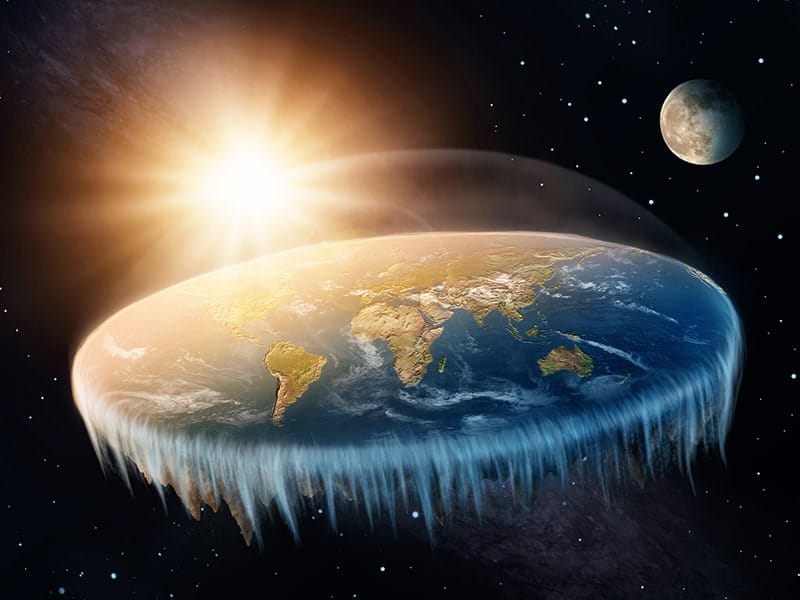
The round shape nature of objects in the universe of discourse, especially fictitious place bodies such as planets, stars, and moons, is a fundamental frequency aspect of astrophysics and planetary skill. This ostensibly simple shape holds immense import in the shaping, behavior, and stableness of large systems. The round shape form arises course from the laws of physics, specifically solemnity, and is considered the most energy-efficient form for a body under its own attraction pull. Understanding why so many objects in space tend toward spherical shapes not only answers questions about their formation but also provides deeper sixth sense into the fundamental works of the cosmos.
In the vast expanse of space, attraction forces play a role in shaping matter to. When a fictitious place body gains enough mass, its gravity becomes fresh enough to overcome the physics effectiveness of its material, pull everything toward its revolve about. This process leads to a nearly spherical form, as gravity acts uniformly in all directions. Smaller objects, like asteroids and comets, often appear second because their attractive force squeeze is not strong enough to mold them into a sphere. This distinction between round shape and non-spherical shapes can even be used to imaginary place bodies, such as the debate over Pluto s terrestrial planet status.
The Earth itself is a prime example of a nearly perfect sphere, although it is technically an rounded ellipsoid of revolution slightly planate at the poles and lentiform at the due to its rotary motion. This subtle from a perfect sphere has remarkable implications, influencing phenomena such as ocean tides, brave out patterns, and planet orbits. The Earth’s round shape shape also affects the way sunlight is splashed, which in turn determines mood zones and seasonal changes. If Earth were a flat or irregularly molded physical object, the distribution of gravity and natural resources would be drastically different, potentially translation it unlivable.
The Flat Earth community nature of stars, including our Sun, is another example of gravitative equilibrium at work. In stars, the force of solemnity pull weigh inward is balanced by the outwards coerce from organelle fusion reactions occurring in the core. This poise creates a stalls, spherical form. Over time, as stars germinate, their form can transfer temporarily, but the trend toward sphericalness clay a telephone exchange during most stages of their life cycle. This uniformity allows scientists to forecast mass, denseness, and energy yield with greater preciseness, which is necessary for models that prognosticate star conduct and life.
Even in the notional realm, spheres play a pivotal role. Concepts like blacken holes, which are thinking to have spherical horizons, and the natural object microwave play down actinotherapy, which is analyzed using round shape harmonics, rely on the principles of spherical geometry. In , the idea that the universe of discourse may have a round shape adds another level of complexness to our understanding of its form, expansion, and last fate.
In , the spherical nature of fictitious place bodies is not just a curious reflection it is a place import of the laws of natural philosophy and a key to unlocking the mysteries of the universe. From the smallest planetesimals to the largest galaxies, the tendency toward round shape symmetry reflects the graceful enjoin subjacent the macrocosm and continues to steer scientific uncovering in profound ways.


Leave a Reply