

In the world of scientific investigation and experimentation, accuracy is paramount. No matter whether you are a biologist functioning with delicate DNA samples, a chemist conducting precise titrations, or a medical expert administering drugs, the reliability of your data and the safety of your procedures hinge on the accuracy of your instruments. 1 of the most basic tools in the laboratory is the pipette, an instrument used for precise liquid measurement. To sustain the integrity of your work, it is crucial to consistently calibrate your pipettes.
Calibration is the procedure of adjusting or confirming the accuracy of an instrument by comparing its measurements to a recognized standard. Pipettes, in spite of their simple appearance, can be surprisingly complicated devices that need frequent calibration to make certain their accuracy. This calibration course of action involves a series of tests and adjustments to guarantee that the pipette dispenses the correct volume of liquid every single time it is applied.
There are many causes why pipette calibration is critical. Firstly, it ensures the reliability of experimental outcomes. Inaccurate pipetting can lead to flawed information, jeopardizing the integrity of analysis. Secondly, it is essential for top quality handle and compliance with industry standards. Numerous laboratories are topic to regulations that require them to use calibrated gear, and failing to do so can have severe consequences. Lastly, right calibration of pipettes is vital for safety, specially in clinical settings. Incorrect volumes can lead to incorrect dosages, potentially harming individuals.
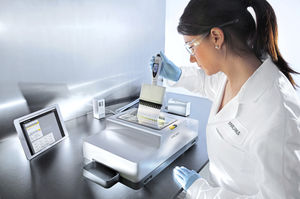
The calibration process normally involves a series of steps. To begin, a pipette is tested by drawing up a identified volume of liquid, such as distilled water, and dispensing it into a receiving vessel, usually a weighing scale or a volumetric flask. The weight or volume of the liquid dispensed is then compared to the anticipated worth. Any deviations are noted, and adjustments are made if required. These adjustments could involve fine-tuning the pipette’s internal mechanisms or replacing worn-out components.
The calibration procedure is not a one particular-time affair. Pipettes can drift out of calibration more than time due to things like wear and tear, exposure to harsh chemical compounds, or improper handling. Thus, periodic calibration is important. The frequency of calibration depends on the pipette’s usage and the specifications of the laboratory. Higher-precision instruments could need to have a lot more frequent calibration than these employed less frequently.
The accuracy of calibration itself is vital, and laboratories normally rely on certified calibration solutions or use gravimetric procedures. These solutions make certain traceability to international standards, which is essential for keeping the accuracy and reliability of the calibration process.
When several contemporary pipettes have digital displays that make them effortless to use, they nevertheless demand appropriate method to obtain accurate results. Pipetting strategy is as essential as calibration itself. Customers need to be trained to manage pipettes properly, avoiding common errors like air bubbles, temperature variations, and imprecise aspiration or dispense speeds.
In conclusion, pipette calibration is an indispensable part of laboratory work, guaranteeing that the measurements are correct, results are dependable, and safety is maintained. It’s a course of action that demands interest to detail, precision, and adherence to established requirements. By consistently calibrating pipettes and following appropriate strategy, scientists and researchers can have self-assurance in their data, contributing to the progress of science and the betterment of society. So, the next time you handle a pipette, keep in mind that its accuracy relies on regular calibration, and your work’s achievement hinges on it.


Leave a Reply